


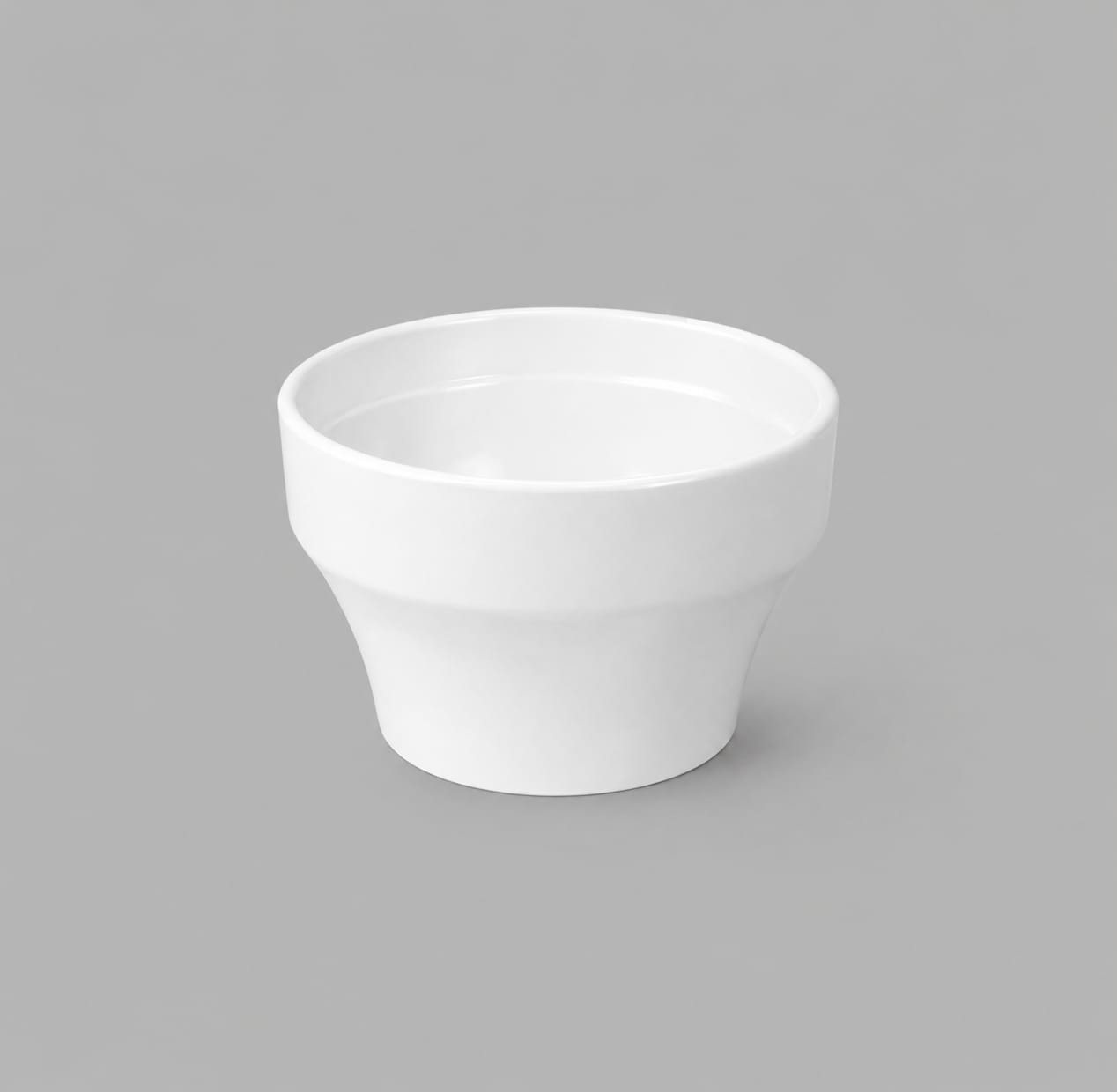

Description
Ceramic cupping bowls are specialized, standardized vessels used by coffee professionals and roasters to evaluate the aroma, flavor, and overall quality of coffee. Designed according to Specialty Coffee Association (SCA) protocols, they ensure consistency by controlling brew depth, surface area, and heat retention across multiple samples.
Key Characteristics & Description
- Material & Build: Crafted from thick-walled, heavy-duty ceramic or porcelain. This material is neutral and will not impart any unwanted flavors or odors into the coffee.
- Geometry: They typically feature a wide mouth to easily release and evaluate volatile aromas, combined with a gentle curvature that supports the formation of the “crust” (a layer of floating coffee grounds) and accommodates cupping spoons.
- Capacity: They generally hold around 200 ml to 260 ml, often featuring clear interior calibration markings (e.g., at 150ml and 200ml) to allow for quick water dosing without a scale.
Primary Uses
- Quality Control (QC) & Tasting: Roasters and buyers use them in side-by-side tastings (cuppings) to grade coffees, detect defects, and ensure roasting consistency.
- Blind Tastings: Often featuring solid white or dark interiors, these bowls visually “blind” the taster to the color of the coffee, preventing subconscious bias.
- The Cupping Process: The user steeps a precise ratio of ground coffee and hot water directly in the bowl. After letting it steep, they use a cupping spoon to break the crust, evaluate the fragrance, skim the foam, and audibly slurp the liquid to spray it evenly across the palate.


